aspects of this site are under construction, some links may be broken

The Shack
Ithaca, New York
A "rent-o-vation" and two solo shows curated by David Dixon
I'm a Stranger Here Myself
solo show
Leslie Brack
opening May 25, 2010
ruined state(s)
solo show
Robert Andrade
opening August 22, 2010
The Shack
Rent-O-Vation
David Dixon
2008-2010
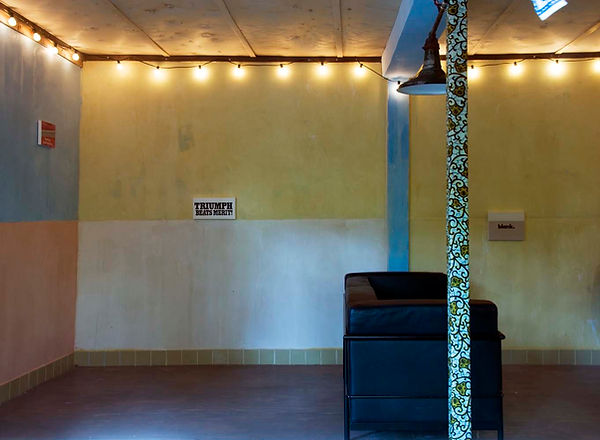
Leslie Brack, I'm a Stranger Here Myself, installation view
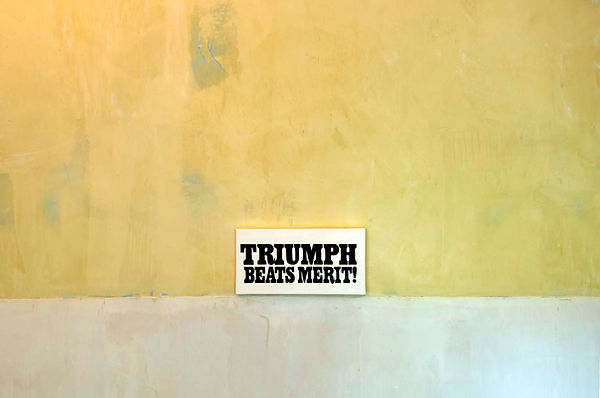
Leslie Brack, Triumph, 2008

Leslie Brack, Blank, 2008
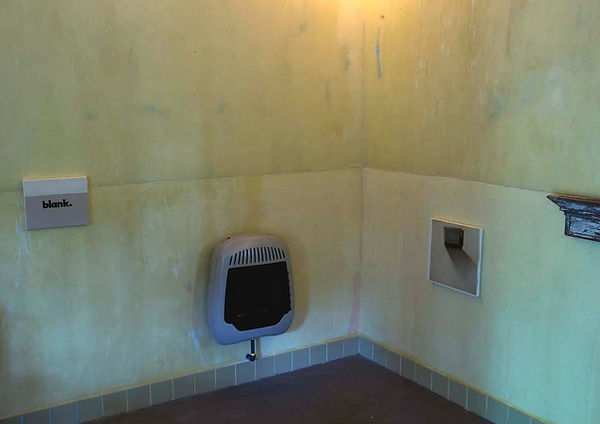

Leslie Brack, TV, 2010


Leslie Brack, Large Daisy, 2010

Leslie Brack, Loner, 2009

Leslie Brack, I'm a Stranger Here Myself, installation view

JLeslie Brack, Glass, 2009

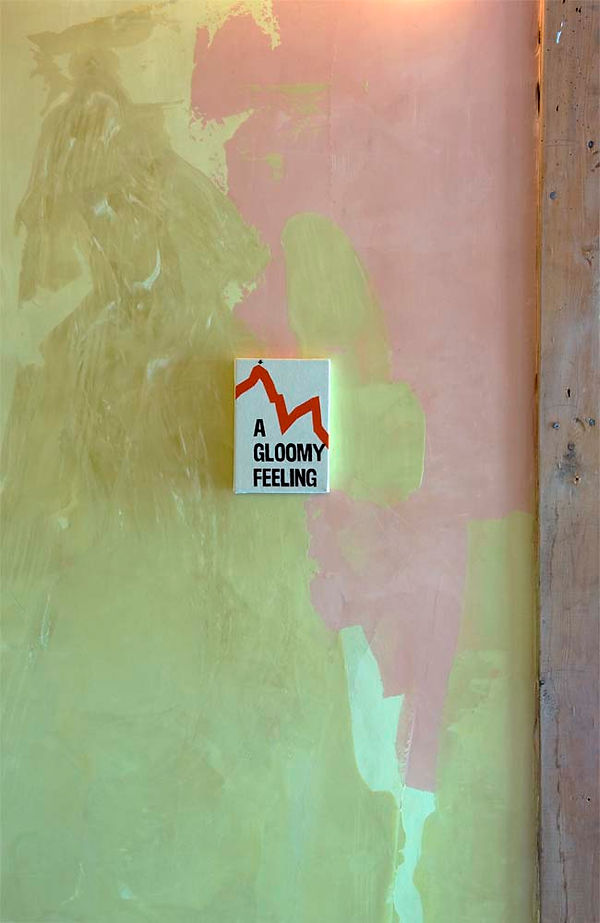
Leslie Brack, A Gloomy Feeling, 2007


Leslie Brack, Make Friends with an Alcoholic, 2008
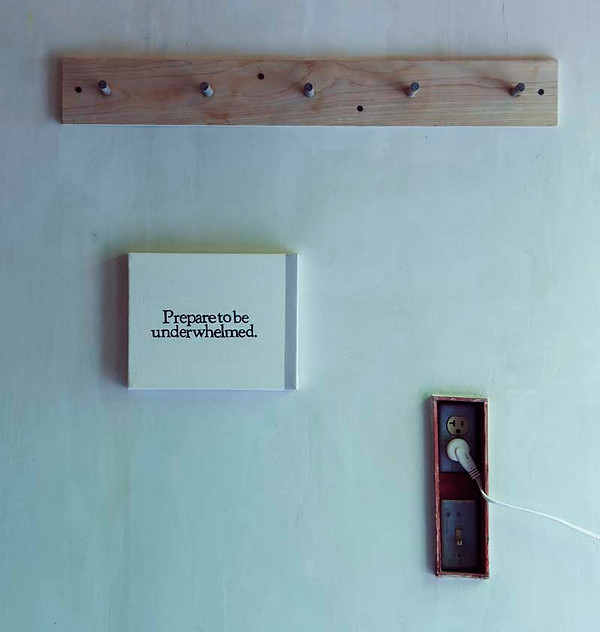
Leslie Brack, Prepare To Be Underwhelmed, 2008

Leslie Brack, Emotional Wreck, 2009

Leslie Brack, I'm a Stranger Here Myself, installation view


Leslie Brack, Presenting, 2009

Leslie Brack, Daisy, 2008
Giuseppe Bellone, Piero Manzoni, 1960

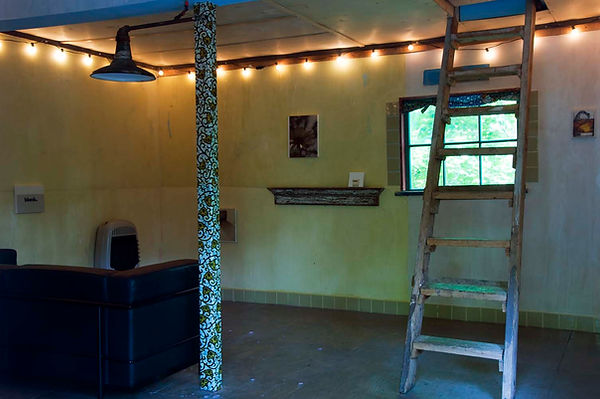
Leslie Brack, I'm a Stranger Here Myself, installation view

Leslie Brack
Howdy, Stranger
The opening reception for I'm A Stranger Here Myself, a Leslie Brack exhibition, will be held this Saturday, May 22, in the D.D. Art Enterprises' hand-crafted Shack at Signal Camp. The exhibit will be accompanied by a screening of rare cult film Johnnie Guitar.
Retro-camp and pop style converge at an installation of Leslie Brack's recent paintings, which will be exhibited this weekend in artist and architect David Dixon's charming and unique space on East Shore Drive. The paintings, mostly oil on canvas, are based on text or image fragments from early 1970s American magazines. Misplaced, shown without accompanying images, and replicated in paint rather than in the familiar glossy print of a magazine, the tone of these paintings is coy, simultaneously playful and uncanny, which produces a effect of slight displacement in the viewer. Routinely reproduced typographies and familiar colors ground the works, however, culminating in a gentle push-and-pull of slightly scrambled indicators offset by more familiar signs and signals.
Saturday's reception for the artist will be followed by a screening of the hard-to-find film Johnny Guitar. "This 1954 cult-classic was directed by Nicholas Ray (Rebel without a Cause) and filmed in Technicolor," Brack noted in an email to Post editors. "It is a campy,color-saturated western-noir written by a blacklisted writer as allegory for the era's McCarthyism and stars Joan Crawford who demanded that the script be rewritten so that she could have the lead "man's" part."
Johnny Guitar exerted significant influence on several of the NouvelleVague directors and gets directly referenced in several Jean-Luc Godard films, said film critic Joshua Land, frequent contributor to the Museum of the Moving Image and Time Out magazines. "Two of the most salient aspects of the film are Ray's highly stylized, even expressionist, use of color and the presence of women in two of the three principal roles—both highly unusual for a Hollywood western."
"I feel a resonance between my own work and the loneliness and overwhelming vulnerability of Ray's characters, the grim, desperate tone of the film, as well as the sharp, humorous dialogue," Brack said.
"The bold visual stylization pushes the Western form into melodrama, or one might say that it brings out the melodrama lurking inside the western form," Land added. "It's a unique film, particularly in the context of a genre that usually trades on laconicism, or masculine terseness."
Shack at Signal Camp is located at 923 East Shore Drive. Extra parking is located across the street in the Visitor's Center. A reception for the artist will start at 6:00 p.m., and a screening of Johnny Guitar will follow at 9 p.m. Visitors are welcome to bring beverages. The screening will be outside by the fireside, weather permitting, otherwise it will be shown in the Shack (free admittance). Following the reception Brack's exhibition will be open for viewing through Sunday, May 30th by appointment.
- Danielle Winterton, The Ithaca Post

The Shack entrance, Robert Andrade, ruined state(s), summer 2010

Robert Andrade, ruined state(s), installation view

Robert Andrade, ruined state(s), installation view

Robert Andrade, model for ruined state(s)
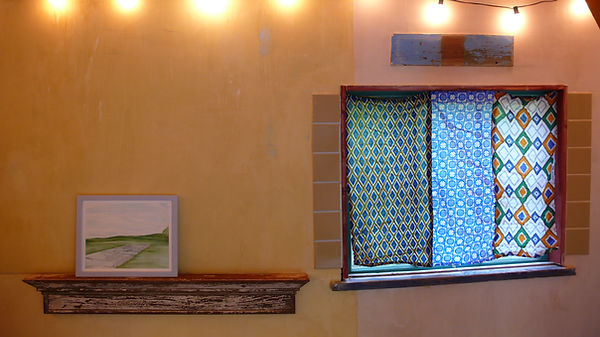

Robert Andrade, sketch for ruined state(s)

Robert Andrade, ruined state(s), 2010

Robert Andrade, detail, ruined state(s), 2010


You search in Rome for Rome? O Traveller! in Rome, itself there is no room for Rome, the Aventine is its own mound and tomb, only a corpse receives the worshipper.
-QUEVEDO
Since 2007, artist Robert Andrade's work has been exploring sovereignty and the material/ideological decomposition thereof through the subjects of biology, architecture, technology, and mediation. His latest work, the aptly titled ruined state(s), looks to the notion of "ruins" for crossover and contrast between universal (even minimal, muted) physical properties of contemporaneity and their conceptual counterparts of classical antiquity.
Andrade dislocates/relocates the physical and conceptual topography of Ancient Rome with a site-specific installation and earthwork by engaging the viewer with a piece purely incubated within a natural environment. Without walls or doors, the configuration of ruined state(s) permits free room for experience and observation unencumbered by the typical museum or gallery space. The artist borrows this notion of engagement from the ruins of the Roman Forum and its reified monuments to create a personal vision of decomposition’s neutral force, to invent a different platform for the longstanding subject/object dialectic. As Frederic Jameson claims, in The Seeds of Time, "Subjectivity is an objective matter, and it is enough to change the scenery and setting, refurnish the rooms, or destroy them[...]for a new subject, a new identity, miraculously to appear on the ruins of the old."
Five concrete segments (4ft x 4ft) impressed with fragments from a map of Rome's civic pathways and pedestrian currents are aligned in the fashion of modern sidewalk slabs. The unreinforced concrete are positioned half way into the ground and will remain exposed to time and the meteorological elements of Ithaca for approximately one year, thereby documenting the inconspicuous frailty of form, history, power, and aesthetic criteria itself. Boundaries, real and symbolic, will slowly decay, and the developing "ruins" will efface idealistic notions, creating a true state of authenticity and workmanship; the artist intends the unintentional. As the piece develops its unified narrative, the individual segments will form corresponding yet variable characteristics. In a nearby enclosure, drawings and a scaled down model of the work are also on display.
Andrade's work challenges the "end of history" and posits a history that can be conjured, reformatted, and abandoned again and again, at the artist's will, all through a concrete mass, a map, and a method of exposition in one.
Roma locuta est, causa finita est.
The Shack: Rent-O-Vation
2008-2010
Conversation about The Shack, rent-o-vation, decorating, etc
with David Dixon and artist Andrea Minicozzi:

The Shack, rent-o-vation, 2008

The Shack, rent-o-vation, original condition, 2008

The Shack, rent-o-vation, original condition, 2008

The Shack, rent-o-vation, original condition, 2008
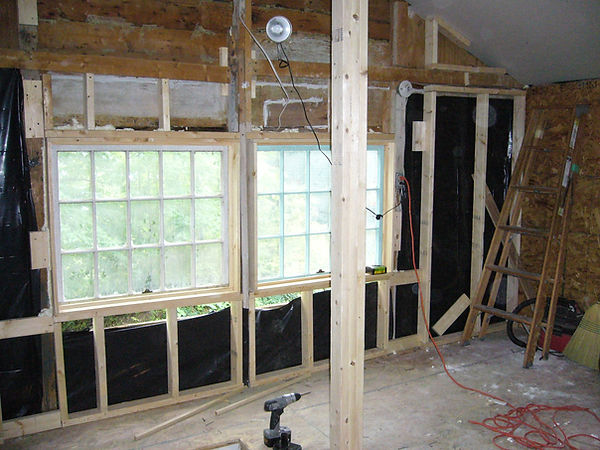
The Shack, rent-o-vation, renovation begins
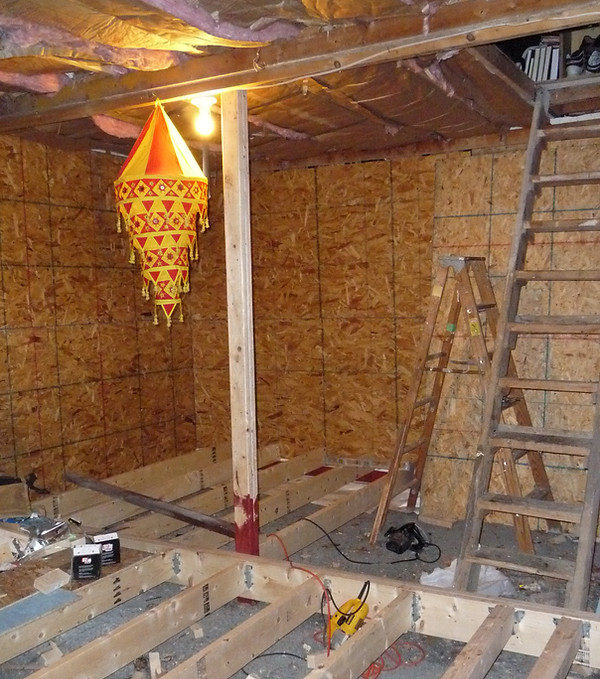
The Shack, rent-o-vation, renovation begins

The Shack, David Dixon rent-o-vating
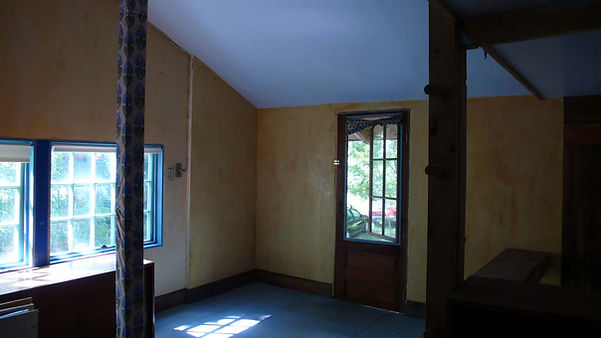
The Shack's venetian plastered walls

The Shack, the view

The Shack, the second floor living quarters finished and installed

The Shack, the second floor living quarters finished and installed
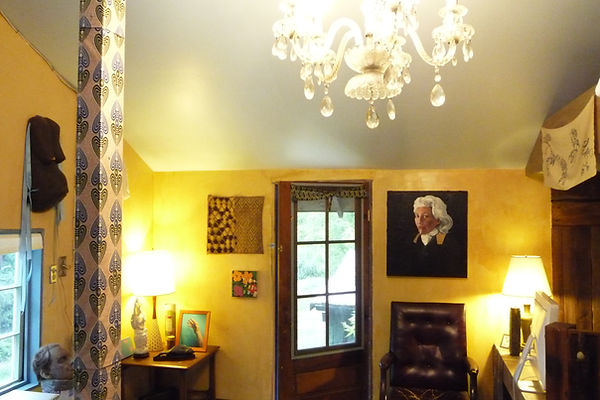
The Shack, the second floor living quarters finished and installed

The Shack, from left, Guanyin, Brad Benishckek can, partial view scholars rock, Stephen Dean Oban, David Dixon hand, partial view Kuba cloth, Leslie Brack painting

The Shack, from left, Sally Chen ink painting and two traditional Chinese Jade Cong


The Shack, the kitchen

The Shack, from left, Brad Benischek poster, Indian glass painting, traditional Chinese fan painting, two Sally Chen ink paintings
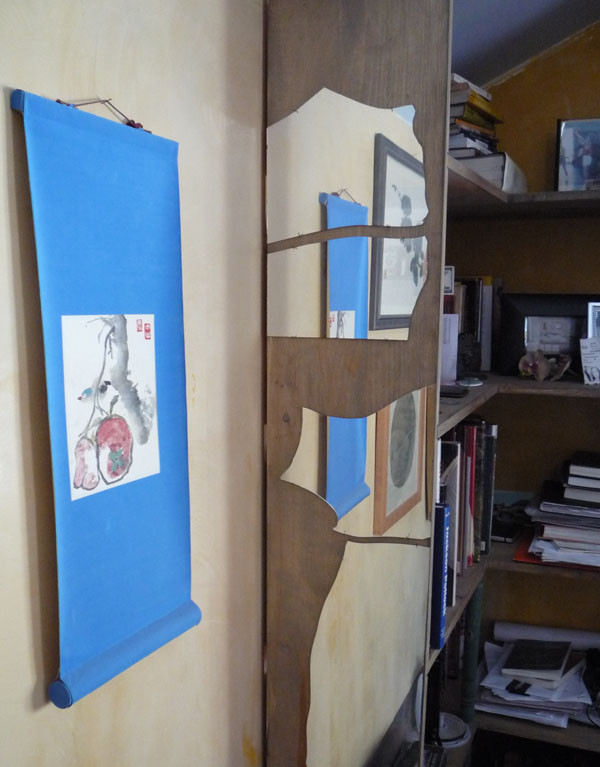
The Shack, Sally Chen ink painting
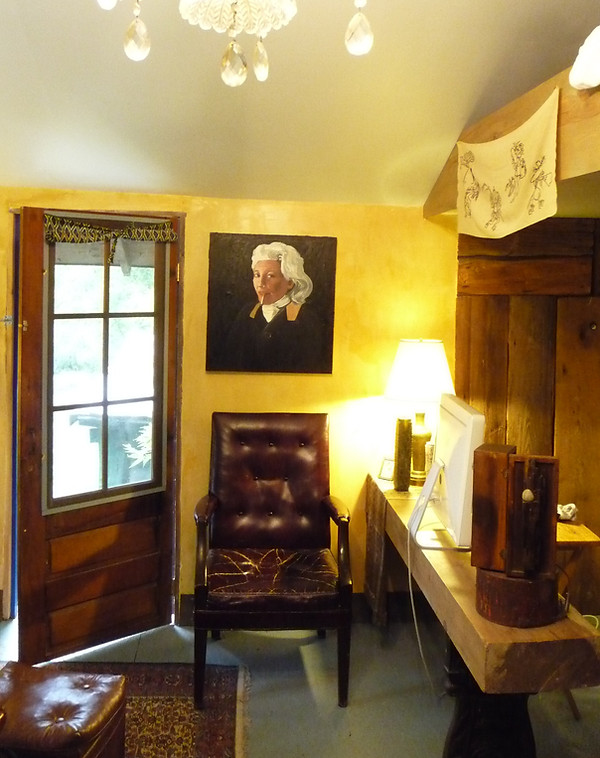
The Shack, Suzy Spence painting, Daniel Swanigan Snow sculpture on desk, Japanese cloth napkin

The Shack, Ralph Lemon watercolor, Guanyin

The Shack, David Dixon x 2