
aspects of this site are under construction, some links may be broken

1GAP Gallery
three shows curated by David Dixon
2020
Measuring. Mapping. Memory.
Manuela Filiaci
solo show
September to January, 2020
A Thumbful of Snow
(Greenwood, Archer, and Pine)
Daniel Swanigan Snow
solo show
January to April, 2020
Photogrophy:
Its Material and Mattering
Michael Ashkin, Beatrice Pediconi, Ethan Ryman, Farideh Sakhaeifar, Tribble & Mancenido
group show
June to August, 2020
One Grand Army Plaza
Brooklyn , NY


far left, Manuela Filiaci, The Sate of Being, 1995

from left, Small Changes in our Point of View

from left, Manuela Filiaci, The Box Case, 1995 to present; Architecture Fragili, 2002

from left, Manuela Filiaci, Stratification, 1974; Box, 2005; Lines in Perpetual Drift, 1989; An Essential Quality, 1998

fleft, Manuela Filiaci, Little Pyramid, 2006; Kleist's Table, 1985

from left, Manuela Filiaci, Little Pyramids, 2006; The Grand Box, 2006, Box, 2006; Red and Yellow, 2018; Balancing Lightness, 2011
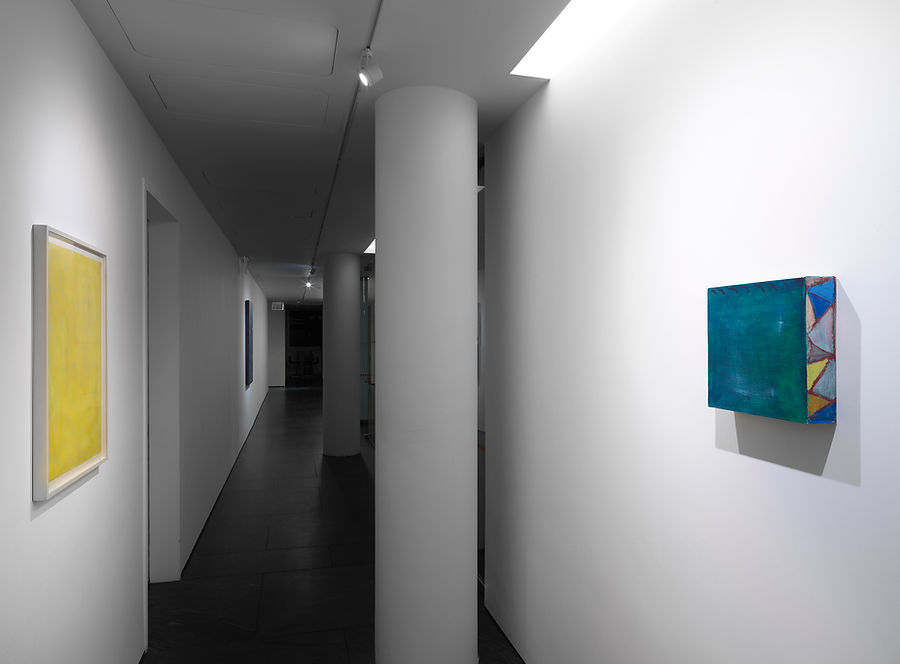
from left, Manuela Filiaci, The Fragility of What is Said, 1998; Not Really Upfront, 2005


from left, Manuela Filiaci, Relationships I, 2018; The State of Being II, 1995; Relationships 2, 2018


Manuela Filiaci, Relationships 2, 2018; Relationships 3, 2018

Manuela Filiaci, The Meaning Inside, 2014

from left, Manuela Filiaci, Becoming Belong to Geography, 2017; Elsewhere, The Mystery of Things, 2018

ffloor 3, Manuela Filiaci, Untitled (Tree), 2001

ffloor 8, Manuela Filiaci, Untitled (Tree), 2002
David Dixon's text for Manuela Filiaci's solo show, Measuring. Mapping. Memory. at 1 GAP
My pictures are maps, maps of simple and solitary places. Perhaps it is less strange to prepare maps with many small areas rather than vast expanses like oceans in which a person fears a lack of orientation. In a map filled with entries, it is always possible to hold on to something. Therefore I attempt on the one hand to keep the space as open as possible, and, on the other, to measure it without imposing a limit upon it...
-Manuela Filiaci
For Manuela Filiaci, in the beginning, there was color, then came form, geometric form, organic form, and organic form that grows from geometry. Her forms are often isolated, emerging, erased, and/or warped, bathed within fields of intense and shifting color. Fans, spirals, hourglasses, columns, arcades, shells, trees, tables, screens... But not only do Manuela’s paintings exhibit forms, they often take the shape of spacial conundrums themselves, e.g., paper scrolls, cardboard boxes, cement bridges, forms that turn into and onto themselves, that fold and encircle, that hide and reveal, that come off the wall and into our space. There is a physics here, but one suffused with atmosphere and mood.
Born in Vicenza, Italy in the Veneto among the neoclassical architecture of Palladio and the luminous, layered paintings of the Venetian masters, one might suspect that this is where Manuela’s artistic tendencies were instilled. Yet, as a young woman she spent several years in Nigeria before eventually moving to New York City in the early 1970s, quickly finding herself among a vibrant East Village scene. It is within this always burgeoning New York art milieu that her artistic identity deepened and took shape. Here at 1GAP we sample a small portion of her prolific, 40-year career. Our selection is by no means exhaustive nor systematic, but rather based on combinations that best highlight Manuela’s poetic, lyrical style and the placement afforded by this building’s signature architectural environment.
Containers, Voids, Surface, Horizons, Luminosity, Color, Atmosphere, Geometry, Paradox, all key words in naming what we see when encountering the aesthetically nourishing work of Manuela Filiaci. Enjoy!
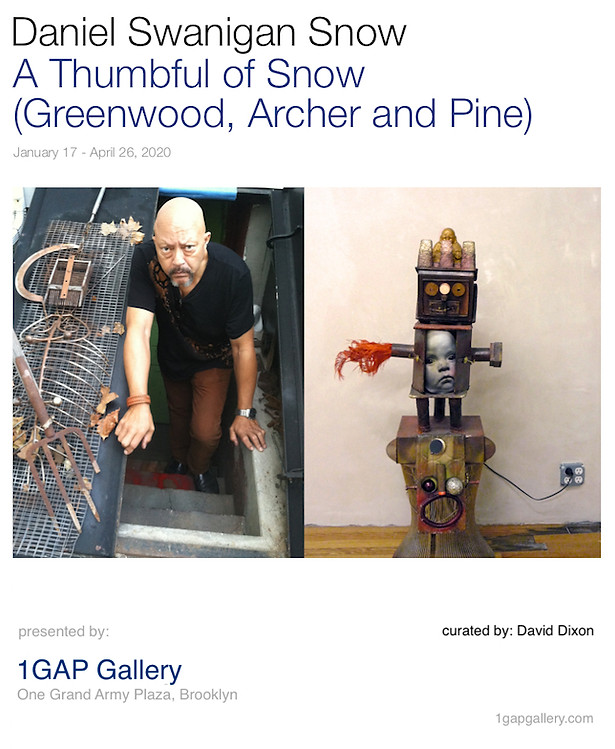

far left, Daniel Swanigan Snow, William Taylor Franklin (WTF), 2016; Owl-Jar-O, 2019


Daniel Swanigan Snow, Mañana, 2014

from left, Daniel Swanigan Snow, Junk For Sale, 2019; Untitled, 2018; Totem III, 2019; Flamingos, 2019

Daniel Swanigan Snow, In the Bag, 2014


from left, Daniel Swanigan Snow, Whale, 2014; Circe, 2019; Shadow Dancer, 2014
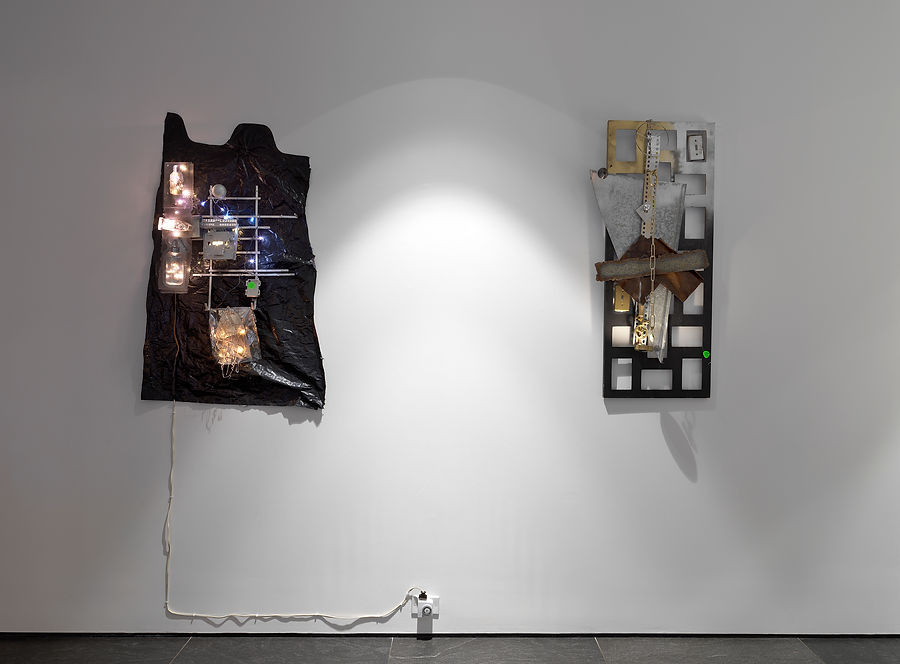
Daniel Swanigan Snow, Uninhibited Agglomeration, 2019; Bureau of Suspended Objects, 2019

Daniel Swanigan Snow, Adioukrou Queen, 2019

Daniel Swanigan Snow, Salle, 2019; Kinda Brown, 2017


Daniel Swanigan Snow, #45, 2019; Cavu, 2008

from left, Daniel Swanigan Snow, Memory in Metal, 2019; Shipwreck, 2016; La Menesunda, 2019; Untitled, 2015

Daniel Swanigan Snow, Snowbot, 2019; Shipwreck, 2016; La Menesunda, 2019; Untitled, 2015

Daniel Swanigan Snow, Ectothermic, 2019; Hypnos, 2020

Daniel Swanigan Snow, Bushman (2016)

from left, Daniel Swanigan Snow, Coup de Coeur, 2019; Funeral, 2019; Pittsburgh Boy, 2018; Fort Lauderdale III, 2016

far left, Daniel Swanigan Snow, Man in a Pizza Box, 2018
David Dixon's text for Daniel Swanigan Snow's solo show, A Thumbful of Snow, at 1 GAP
By comparing the photograph of Totem III from 2014 in this exhibition's poster to Totem III in its current state installed to the left in the hallway, one gets a quick impression of the fluid state of Daniel Swanigan Snow’s approach to art making. Nothing is static, everything is in flux. Until a work is purchased or otherwise taken out of the possession of the artist, even after it is “finished,” it is alway vulnerable to alteration.
Snow’s basic method is assemblage, that is to say, the putting together of disparate things to create a single entity. These entities are often kinetic or have an internal light source that can be either turned on or off, the resulting cast shadows are considered part of the composition. For any sculptor physical material is important, but for Snow, time and light are also manipulable elements; consequently, his work takes on aspects of performance and theater.
This performative tendency can be attributed to the fact that Snow is an actor and has spent most of his adult life in theater and film. He describes being dazzled as a boy in Erie, Pennsylvania by the transformative magic of the stage lights in his local theater. Yet, an actor is always dependent on the larger production for expression, and this began to feel limiting for Snow later in life. To compensate, he began pouring his excess actor creativity into transforming, not himself into characters, but now objects into art. This personal artistic expansion happened for Snow at the age of 54, over ten years ago. He’s been immensely prolific ever since, gaining much critical attention in the genre of, what is generally designated, “Outsider Art.”
Snow works from a basement studio in Dyker Heights, Brooklyn, which he calls his “laboratory.” His larger sculptures also spill out into the yard, and are arranged with the intention of catching the attention of his neighbors. Interestingly, “yard art” has been a steady form for marginalized, self-taught artists in the South for over a century where they caught the eye of a young Robert Rauschenberg growing up in Texas. This outside outsider form, “yard art,” later influenced Rauschenberg’s “combines,” an assemblage, painting technique he developed in the 1950s. Decades later, in turn, it is these combines that Snow happened to see in a magazine that inspired him to start making art.
We have come full circle then, from Outsider Art in Texas to the ultimate New York insider, Rauschenberg, back to Snow, once again, as an outsider living here in New York. Although, critic Patricia Frank in an article for the Huffington Post (copies available in the conference room) references Snow’s assertion that an artist first has to be outside before becoming an insider. So seems Snow has no intention of staying outside in the yard forever; ergo, we thank you for allowing A Thumbful of Snow into your home.
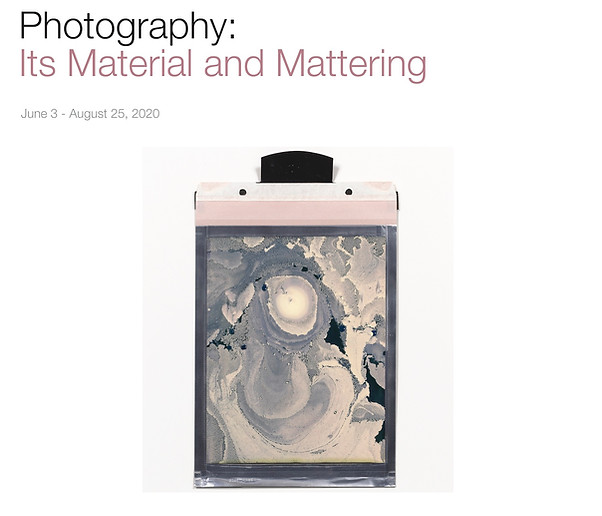
Photogrophy:
Its Material and Mattering
Michael Ashkin, Beatrice Pediconi, Ethan Ryman, Farideh Sakhaeifar, Tribble & Mancenido
group show
One Grand Army Plaza
Brooklyn , NY

left, lTribble & Mancenido, Atwood Road, 2015-18, right, Farideh Sakhaeifar, Workers are Taking Photographs, 2008

Michael Ashkin, Dismal Dreaming, 2016

Farideh Sakhaeifar, Workers Are Taking Photographs, 2008
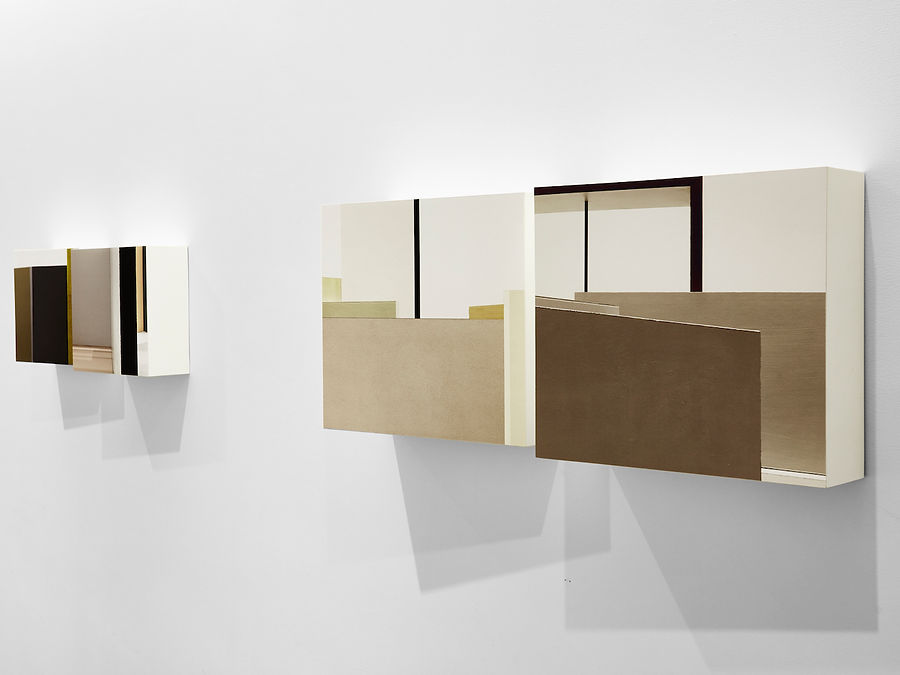
Ethan Ryman, Band Convergence 1.3, 2017

Beatrice Pediconi, Gaea #5 and #3, 2018
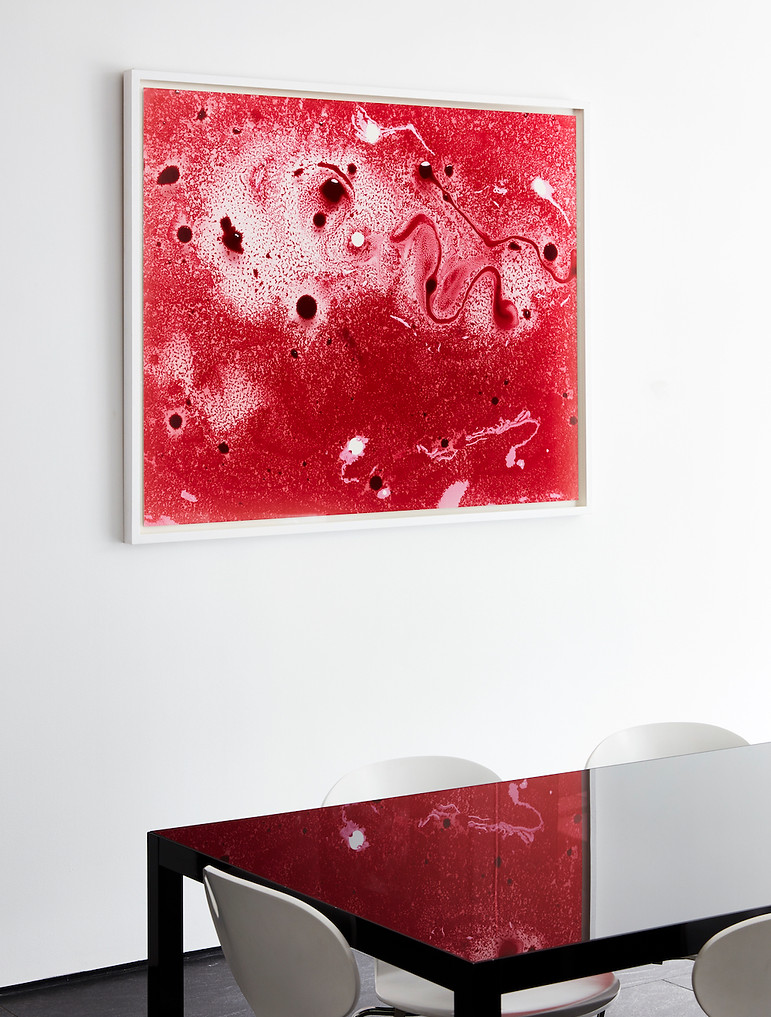
Beatrice Pediconi, Alien C, 2016
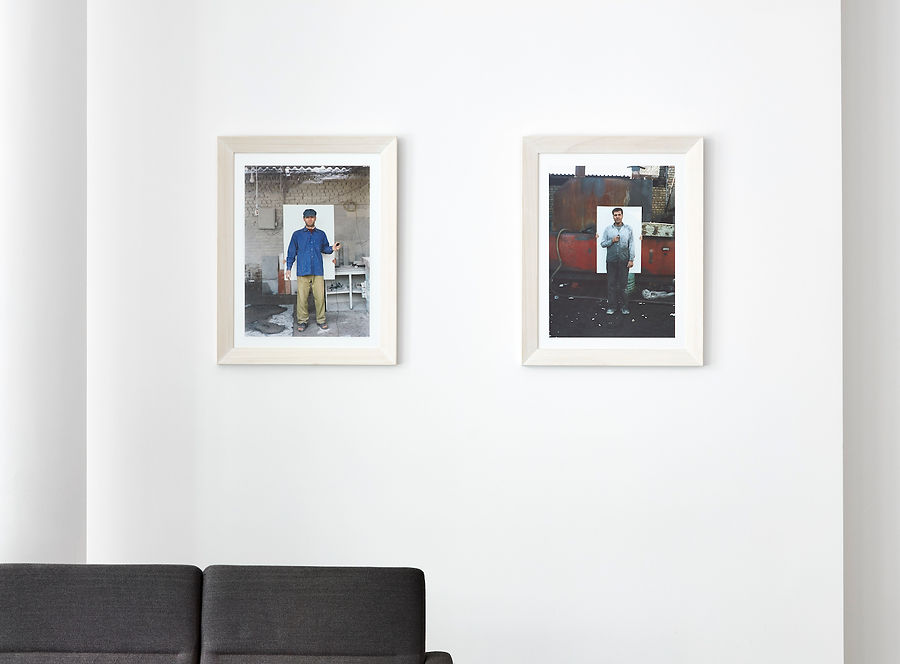
Farideh Sakhaeifar, Workers Are Taking Photographs, 2008

left, lTribble & Mancenido, Atwood Road, 2015-18, right, Michael Ashkin, Dismal dreaming, 2106
Photography: Its Material and Mattering, 1GAP Gallery,
In the second half of the 20th century, the then MoMA curator of photography, John Szarkowski, famously predicted that one day there would be more photos than bricks in the world. This analogy already seems dated in an era where images are free of any terrestrial context whatsoever, where they are shared, seen, even loved, yet rarely printed. Photos, most likely, if one could count to infinity, have far outstripped bricks, yet now they float, competing with the air itself. Its arguable, though, to some traditionalists, that all those instagram images out there aren’t really photography. Photography is not a snap-shot, but an image that conveys purposefulness. This may be photography’s one chance for survival as an art form: to continue to find ways to be purposeful, to matter, in a world awash with images. One way to accomplish this is to ground the photograph in material, to consider and resolve, not just the image, but how the photograph is seen and experienced. All of the artists in Photography: Its Material and Mattering, do this with aplomb.
Here, with Dismal Dreaming, Michael Ashkin seems to be single handedly trying to accomplish Szarkowski’s task with his “extreme” series of black and white photographs, arranged brick-like in a continuous, infinite stream of dread. These pictures were taken in Palm Springs, California, but do not be fooled, the decomposition is all around us, which Ashkin demonstrates an uncanny ability at recognizing. Each of his pictures is always, surprisingly, perfectly composed––considering the sheer number of them––lending a stable, almost stagnant air to the flux of capitalism’s engulfing entropy.
Workers are Taking Photographs takes us to the working core of Tehran, where Farideh Sakhaeifar arranged a situation in which she, the artist, allows the worker to shoot (always) himself, not killing with the shot, but allowing him to lift himself out of his condition. The pure white placard held behind each functions like an afterlife where he, like she, gets to emigrate to America and hang on the white walls of New York’s multifarious galleries.
White, too, plays a role in Tribble and Mancenido’s Atwood Road series; however, three out of the four works hung here use primary colors to filter the young artist couple’s first house in upstate New York. Humble, no doubt, but––considering the attention lavished by the minimalist aesthetics––heroic in stature: a working family’s dream of home. Perhaps the ultimate version in the series is the one where the house is obliterated by white?
Ethan Ryman has a theory of obstructivism that contends it is impossible to ever see something whole because something else is always getting in the way, and then that obstructed view becomes the view that we mistake for the whole, forcing an abstraction on experience that is always far from “real.” If one looks carefully at his photo diptychs a trompe-l’oeil effect occurs from the combination of a high-resolution photographic image, which only the most recent digital technology could allow, with the oldest, most essential ingredient in photography: light.
Light hitting a surface prepared with emulsion to capture, freeze, or appropriate a moment in time. This is traditional photography, before the digital, when a photograph was born in a series of baths. A liquid state that is then dried and solidified, usually into some sort of recognizable bit of reality. Yet, Beatrice Pediconi does not play this game, her photo reality remains liquid and true, like the material encased in any Polaroid photo packet. Her’s is photography’s (and our) primal form, born of the sun and the sea, liquid and always longing to be free…
David Dixon, June 2020